Fixed Asset Management System
One item, one code; precise control; enabling full-process management of assets from purchase to disposal.
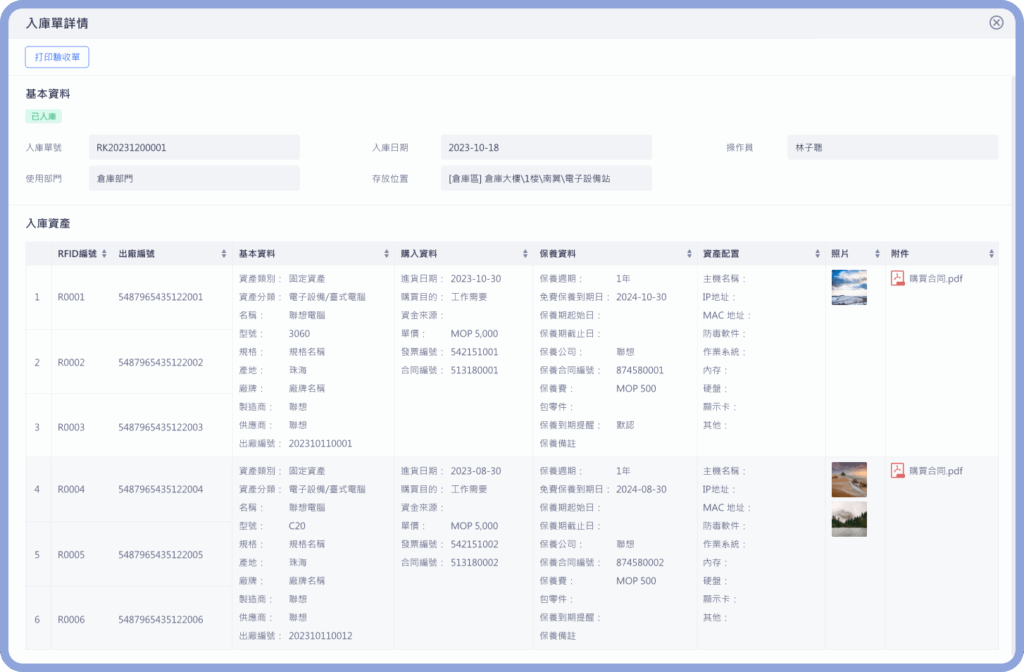
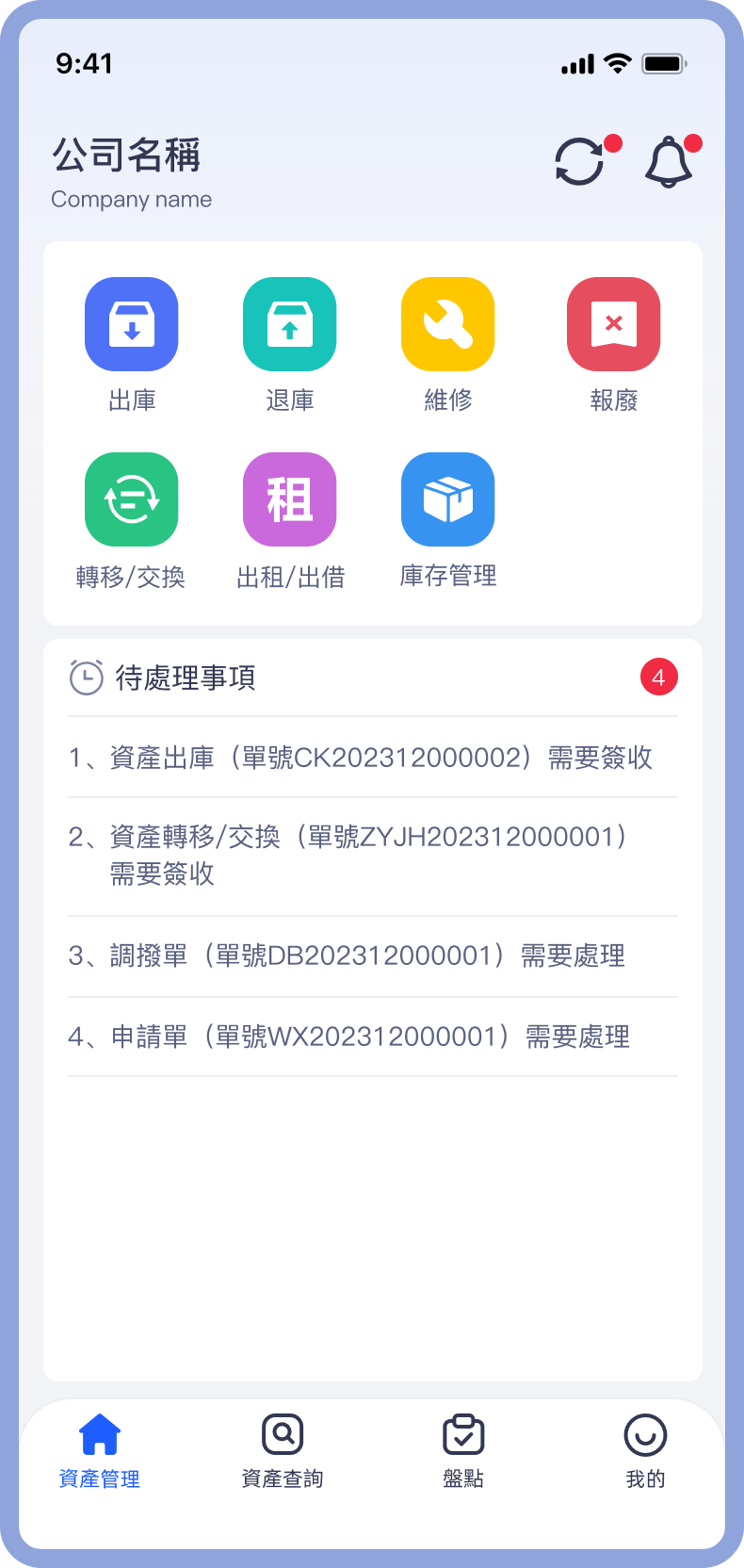
Warehouse entry registration
The fixed asset management system's entry and registration function is the primary link in asset management. It aims to ensure, through standardized and digitalized processes, that every asset has complete information, clear responsibilities, and a traceable track record from the moment it enters the enterprise.
Asset information digitization and unique identification coding
Based on refined asset management, the system creates a complete electronic file for each newly added asset and assigns it a unique "digital identity."
Standardized approval process and electronic archiving
Throughout the process, relevant personnel can upload purchase contracts, invoices, acceptance certificates, and other documents as electronic attachments to the system, which will be permanently linked to the receiving slip.
Real-time inventory updates and data linkage
This ensures the timeliness and consistency of corporate asset data, eliminating discrepancies between accounts and actual records caused by information lag or human error. Simultaneously, through data linkage, asset management is tightly integrated with financial, procurement, and other business processes, improving the overall organizational operational efficiency and management insights.
Outbound registration
Electronic outbound application and approval process
The traditional paper-based requisition application process has been transformed into a standardized electronic approval process, ensuring that every asset release has a legal and compliant basis.
Real-time asset status updates and location tracking
The system keeps accounts synchronized with physical assets, allowing administrators to track the exact whereabouts of any asset at any time, completely resolving the dilemma of "assets not being found".
Linked with inventory management and depreciation calculation
After an asset is issued, the corresponding warehouse or department's inventory level in the system will automatically decrease immediately. This provides an accurate data foundation for inventory counting and purchasing planning.


Return registration
Real-time updates of asset status improve the accuracy of accounting records.
Once an asset is returned to the system, its status is immediately updated to "idle and ready for use" or "pending scrapping." This allows managers and the finance department to access the latest information in real time, preventing discrepancies between the recorded inventory and actual stock.
Simplify the return process and strengthen accountability.
The system records the person returning the asset, the time, the asset's condition, and the reason for return, clearly defining the responsibilities for use and safekeeping, facilitating subsequent tracking and management, and avoiding issues such as asset loss or unclear attribution of responsibility.
Accelerate asset turnover and optimize resource allocation
Returned assets can be quickly marked as available resources by the system, allowing managers to rapidly reallocate idle assets to other departments in need, improving asset utilization efficiency and reducing the cost of duplicate purchases.
Transfer/Exchange Registration
Clearly record the flow trajectory to enhance asset supervision.
The system automatically records the time, department, custodian, and location of asset transfers, establishing a complete asset history. This facilitates tracking the current location and historical movements of assets at any time, effectively preventing asset loss.
Clearly define custody responsibilities and implement management authority.
Through a systematic transfer process, the responsibility for the custody of assets can be transferred from the original holder to the new holder in a timely manner, ensuring that each asset has a clear attribution of responsibility and avoiding subsequent management disputes.
Optimize resource allocation and improve asset utilization efficiency
This enables management units to quickly allocate idle assets to units that need them, allowing resources to flow effectively between departments, reducing duplicate purchases, and maximizing the utilization value and return on investment of assets.

Rental/Lending Registration
It transforms traditional, cumbersome, and error-prone paper-based operations into standardized and automated digital processes. It not only comprehensively records the details of rental contracts and clearly defines management responsibilities, but also effectively monitors asset dynamics through proactive system reminders, preventing overdue payments and losses.
Improve the record contract terms
The system can record key terms in detail, such as the renter, contract start and end dates, rent, and return conditions, facilitating payment tracking and management, and ensuring the company's rights and expected returns.
Keep track of asset dynamics
The system can proactively send reminders before the lease expires, helping managers track asset status and effectively preventing assets from being overdue or lost due to negligence.

Distinguishing between internal and external flows
By establishing independent functions, assets can be clearly distinguished as either internally transferred or externally leased, and external borrowing entities can be recorded to establish return responsibilities and avoid confusion with internal management.
Assess asset efficiency
Systematic record-keeping helps analyze the frequency and revenue of asset rentals, providing data-driven decision-making support for subsequent asset acquisitions, replacements, or expansion of the rental business.

Repair Registration
It transforms fragmented maintenance information into valuable decision-making data, not only comprehensively recording the cause of each failure, the parts replaced, and related costs, establishing a traceable asset health history, but also proactively reminding users of regular maintenance through systematic tracking, shifting from reactive repair to proactive prevention.
Complete maintenance history
The system can record in detail the date, reason, manufacturer, cost, and replaced parts for each maintenance, forming a complete maintenance history.
Tracking maintenance costs
Automatically accumulating the cost of each maintenance and repair helps in analyzing the long-term maintenance costs of a single asset.
Real-time updates of asset status
When an asset is sent for repair, the system can immediately update its status to "under maintenance" and lock the asset so that it cannot be accessed.
Optimize your skincare schedule
Based on maintenance records or fixed schedules, it can proactively issue preventative maintenance reminders to assist management personnel in planning ahead.
Scrapping registration
Ensure that accounts match actual records and maintain the accuracy of financial statements.
Once an asset is registered for write-off, the system will immediately remove it from the asset register to ensure consistency between financial records and actual inventory results, thus preventing the artificial inflating of asset value.
Improving asset lifecycle management facilitates subsequent tracking.
The system records the scrap date, reason, disposal method, and residual value, establishing a complete history of the asset from acquisition to disposal, facilitating subsequent audit tracking and management analysis.
Release asset quotas and budgets to optimize resource allocation.
Once the asset is formally scrapped, the maintenance budget and management slots for that asset can be released, allowing the management unit to plan procurement more precisely and invest resources in effectively operating equipment.

Asset inventory
It transforms traditional, time-consuming, and labor-intensive manual inventory checks into a highly efficient and precise automated operation. Through mobile device scanning, data is synchronized with the system in real time, not only generating discrepancy reports instantly and quickly identifying problematic assets, but also establishing a clear and traceable audit trail.
Improve inventory efficiency and accuracy
By using technologies such as barcodes or RFID for inventory checks, asset information can be quickly read and compared in real time, significantly reducing the time spent on manual counting and minimizing human input errors.
Immediately revealing differences and facilitating tracking
The system can immediately generate reports of inventory surpluses and shortages, and mark the location of assets, helping managers quickly identify problems, trace the causes, and provide a basis for subsequent improvements.

Ensure that the assets are consistent with the actual assets
Regular or irregular inventory checks can verify whether the system accounts match the actual quantity and status of assets, ensuring the accuracy and reliability of asset values on financial statements.
Strengthen audit tracking and management responsibility
The system automatically records the personnel, time, and results of each inventory count, establishing a complete audit trail. This not only meets internal and external audit requirements but also ensures the implementation of departmental management responsibilities.
Inventory Management
Real-time inventory status monitoring allows you to grasp the overall dynamics.
The system provides real-time inventory queries, allowing administrators to quickly understand the quantity, location, and status of various assets (e.g., new, idle, under maintenance), avoiding information discrepancies.
Optimize inventory levels to avoid capital tied up and shortages.
By analyzing data on asset requisition, return, and consumption, the system helps set safety stock levels, reduce unnecessary inventory and idle funds, and prevent asset shortages from impacting operations.
Strengthen change tracking to ensure process compliance.
All changes in assets, including receipt, issuance, and transfer, are recorded by the system, forming a clear audit trail that facilitates tracking of asset flows and strengthens internal control and management discipline.
Analysis Report
Provide decision support and optimize asset allocation and procurement.
By analyzing reports on depreciation, utilization rates, and maintenance costs, managers can accurately assess asset efficiency and decide which assets to replace, repair, or purchase, thus making budget allocation more rational.
Gain insight into the cost structure and implement total cost of ownership management.
The system can integrate data from procurement, maintenance, and depreciation to calculate the complete lifecycle cost of a single asset, identify cost loopholes, and effectively control them.
Meet compliance and audit requirements and enhance management transparency.
It can generate various reports (such as asset lists and depreciation details) that comply with accounting standards and internal and external audit requirements with a single click, ensuring data accuracy and consistency and strengthening governance capabilities.